Growing the Future of White Oak: Research and Tree Improvement at Oak Spring
OSGF
White oak (Quercus alba) has long been an important part of the eastern American landscape. A keystone species in many forest ecosystems, it provides valuable food and habitat for wildlife, including wild turkey and white-tailed deer. Its strong, durable hardwood is also highly valued by the timber and cooperage industries, where it is used to make the barrels in which bourbon and other spirits are aged.
Despite the abundance of mature white oaks, natural regeneration can be challenging. Factors including deer browsing, limited seedling survival, and changing environmental conditions can make it difficult for younger trees to establish and replace older generations.
To help address this challenge, the University of Kentucky established the White Oak Genetics & Tree Improvement Program (WOGTIP), a collaborative research initiative bringing together more than 75 organizations across the eastern United States. The program uses traditional tree improvement methods to better understand the genetic diversity of white oak and identify trees with desirable characteristics that may contribute to healthier, more resilient forests.
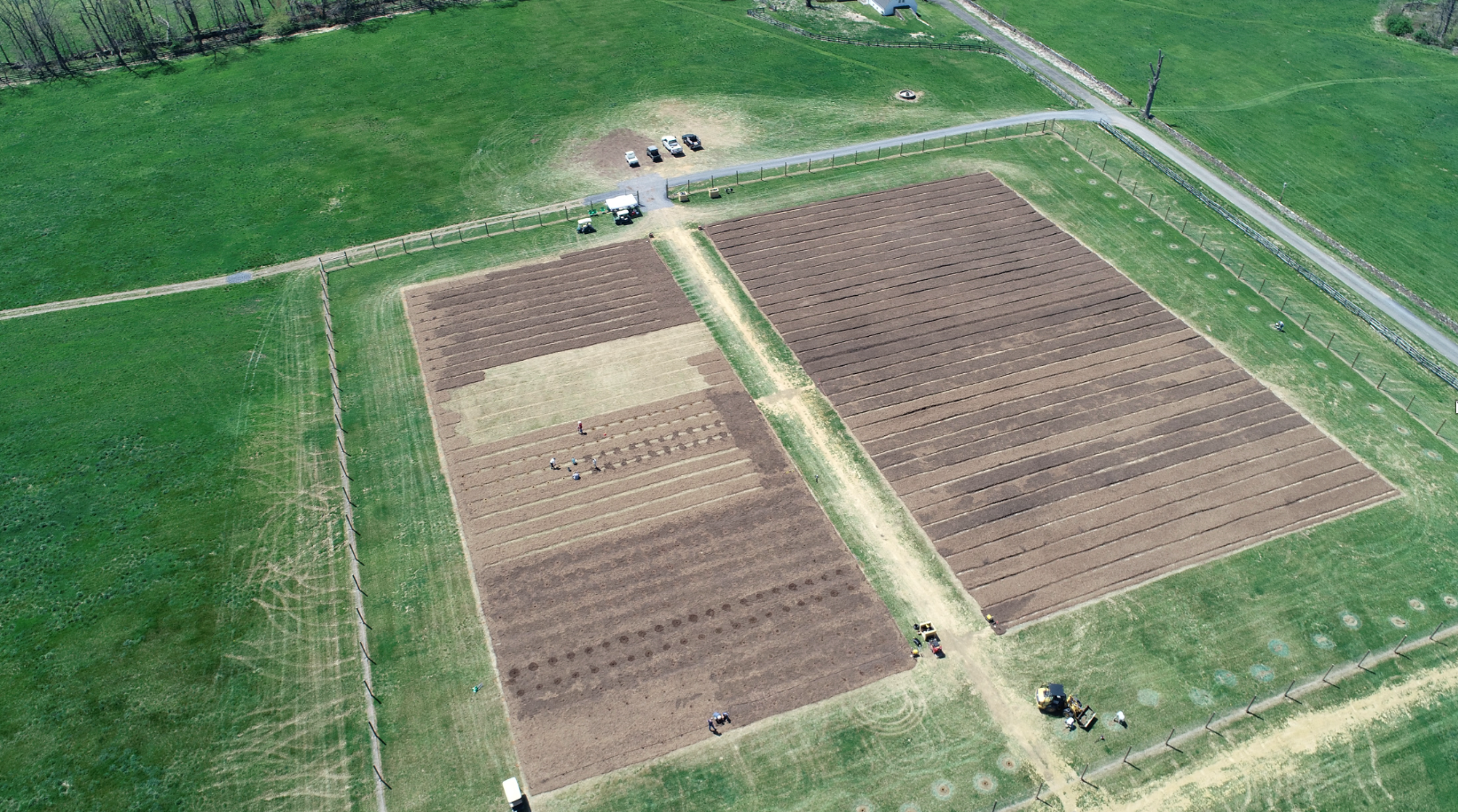
An aerial image of the white oak plot at the beginning of its planting in 2022.
OAK SPRING’S ROLE IN A COLLABORATIVE RESEARCH EFFORT
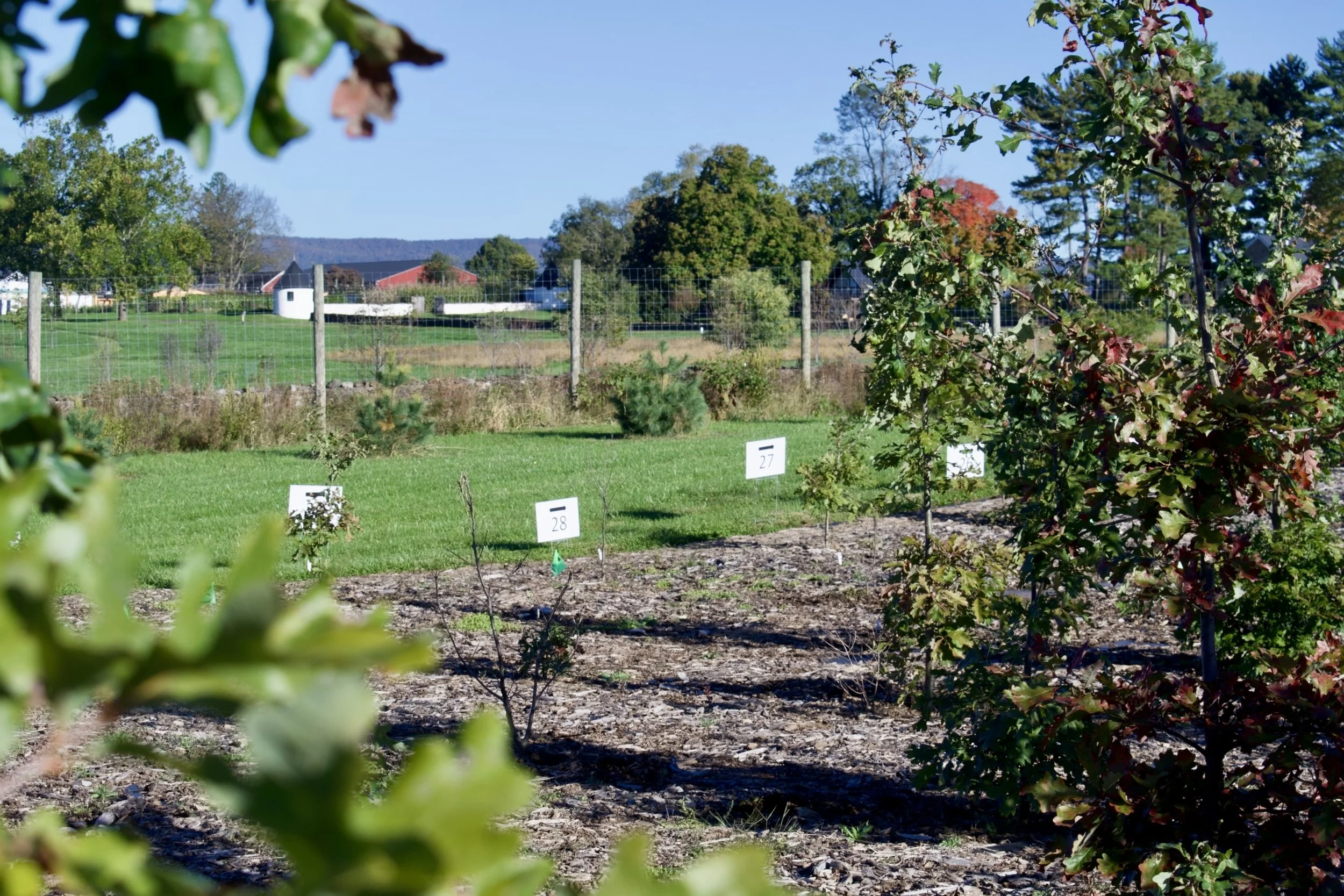
In spring 2023, Oak Spring joined the program during its second phase, known as progeny testing. A fenced research plot was established on Rokeby, where 791 white oak saplings were planted. These trees are genetic replicates of offspring from 34 Virginia mother trees, grown from acorns collected as part of the program's earlier research.
The plot is one of several regional research sites established to evaluate how offspring from different parent trees perform under comparable growing conditions. By monitoring their development over time, researchers can identify differences in growth, form, adaptability, and other traits that may be valuable for future generations of white oak.
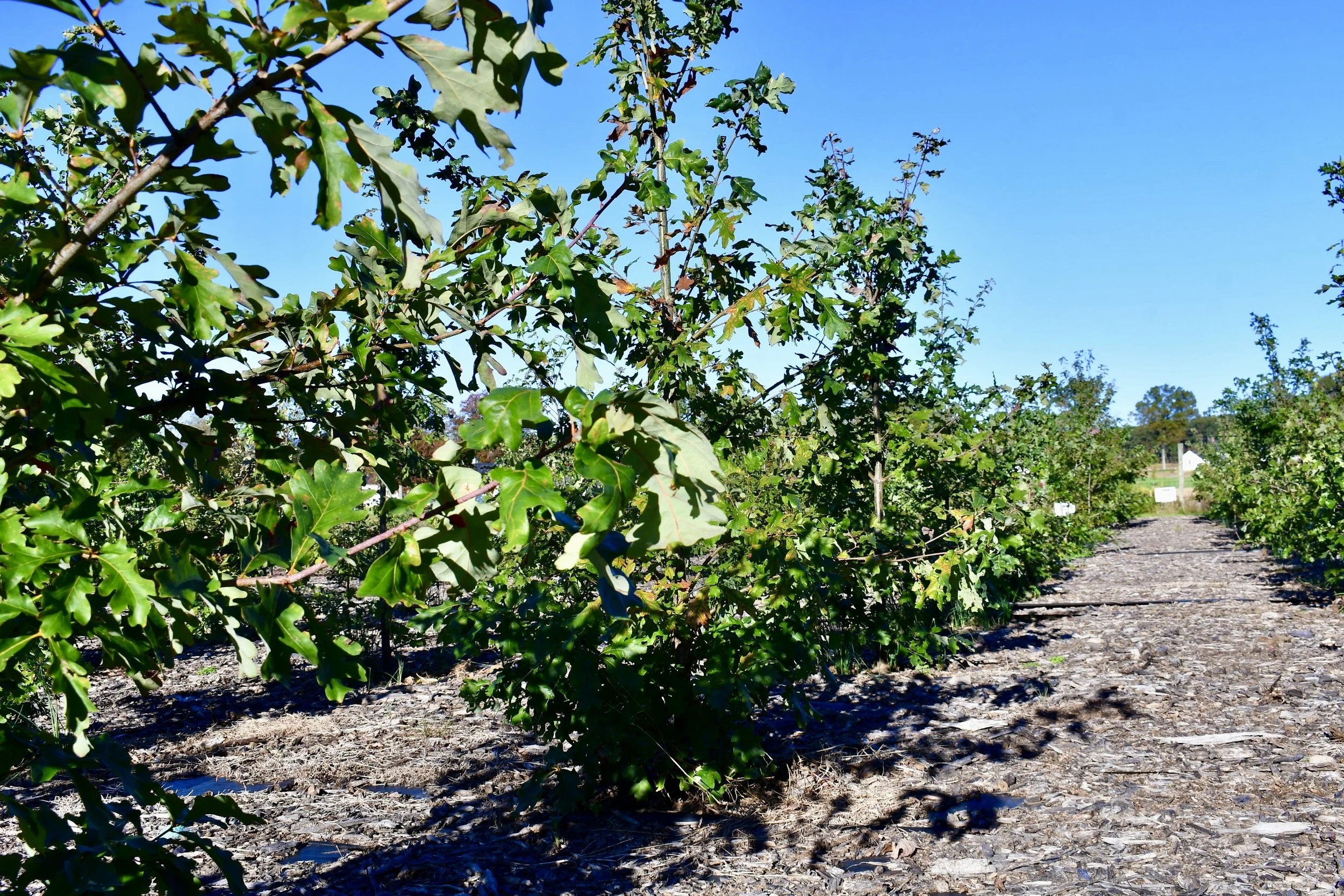
The white oak plot as it exists today. Image taken October 2026.
MONITORING GROWTH OVER TIME
This work requires patience. White oak progeny tests are monitored over many years, allowing researchers to understand how individual trees develop and which parent trees produce particularly promising offspring.
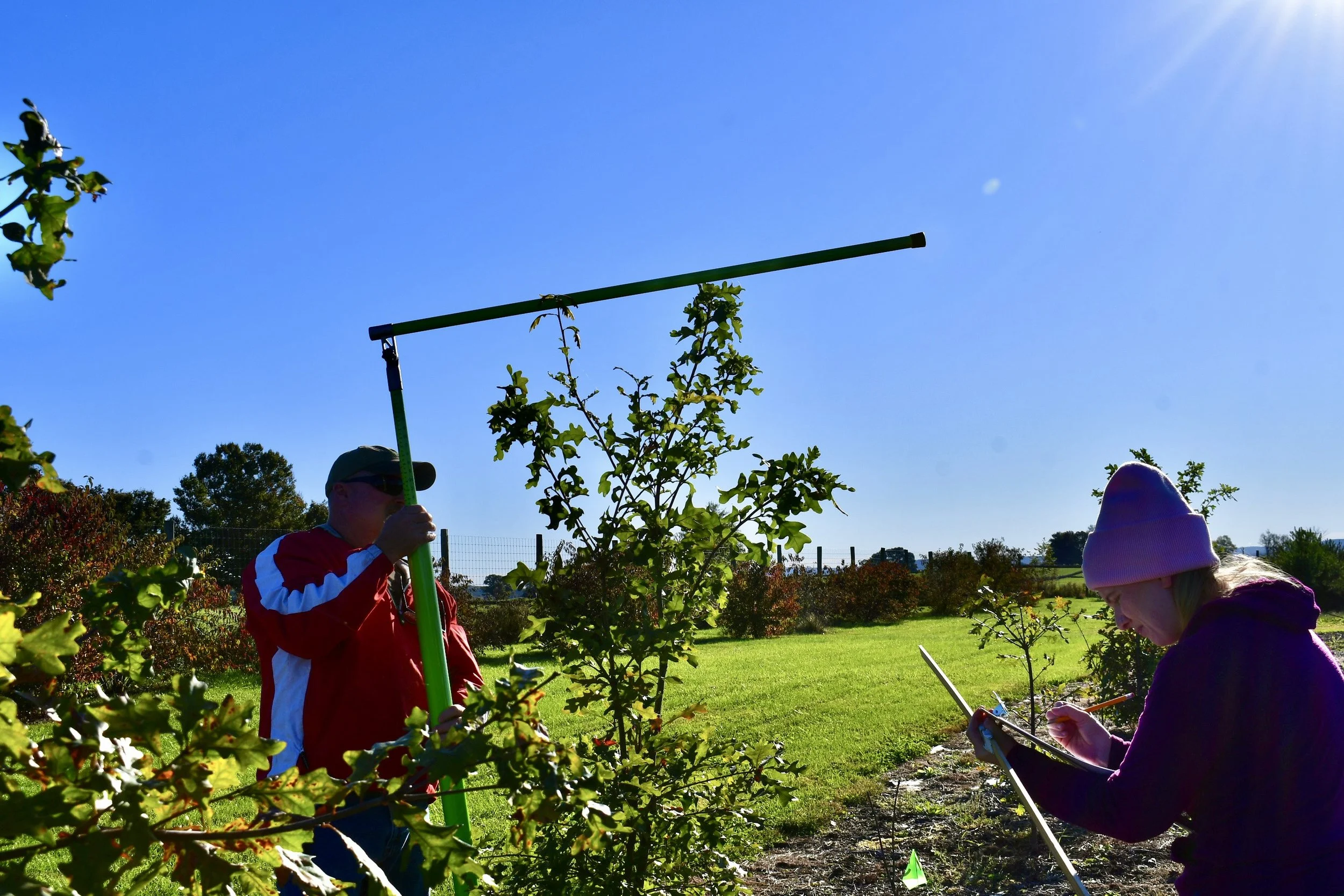
Last month, Oak Spring's ACL and Native Plant Conservation teams returned to the Rokeby plot to conduct the latest round of monitoring. The teams measured tree heights, assessed plant health, and updated the project's data, continuing a record of growth that began following the 2023 planting.
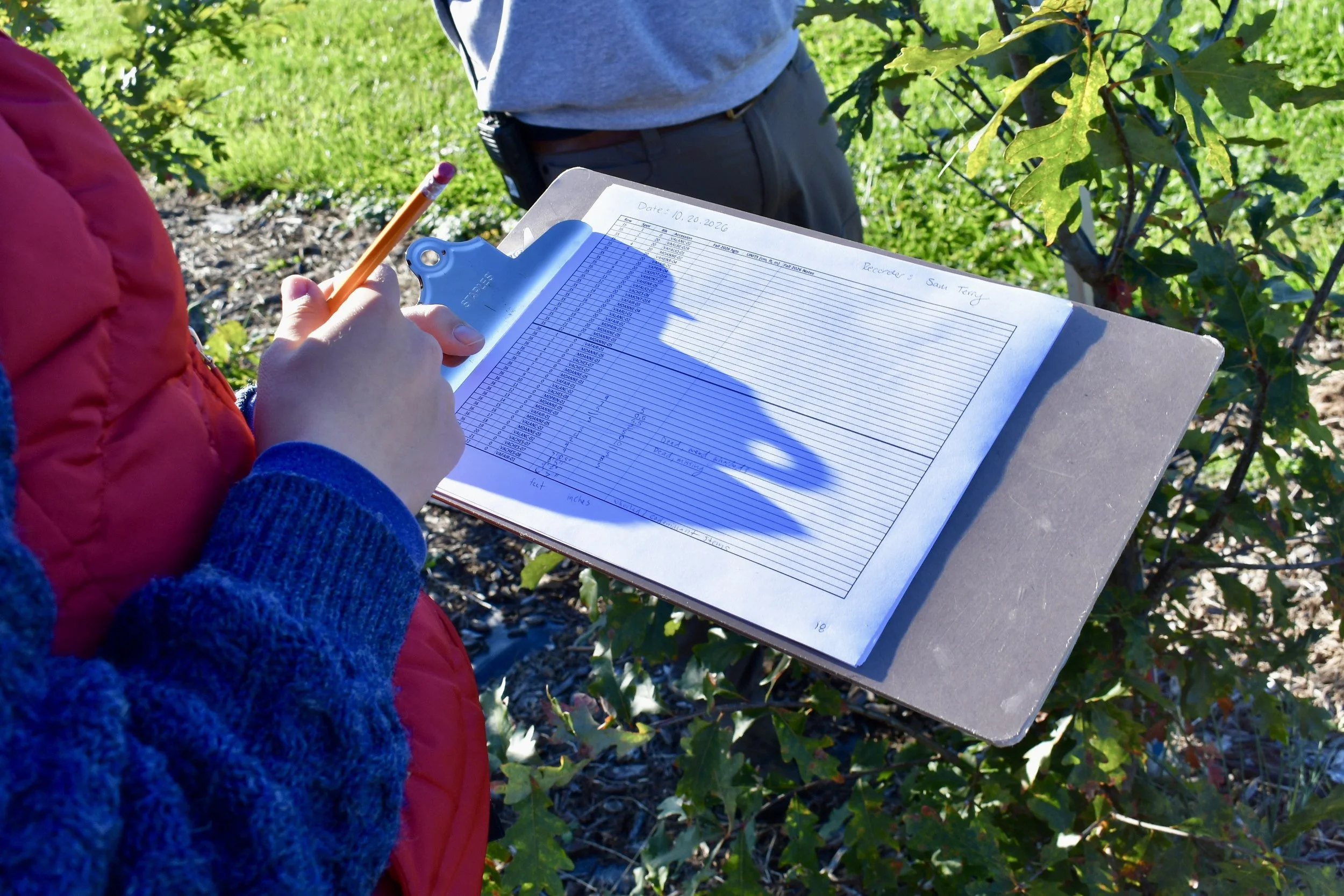
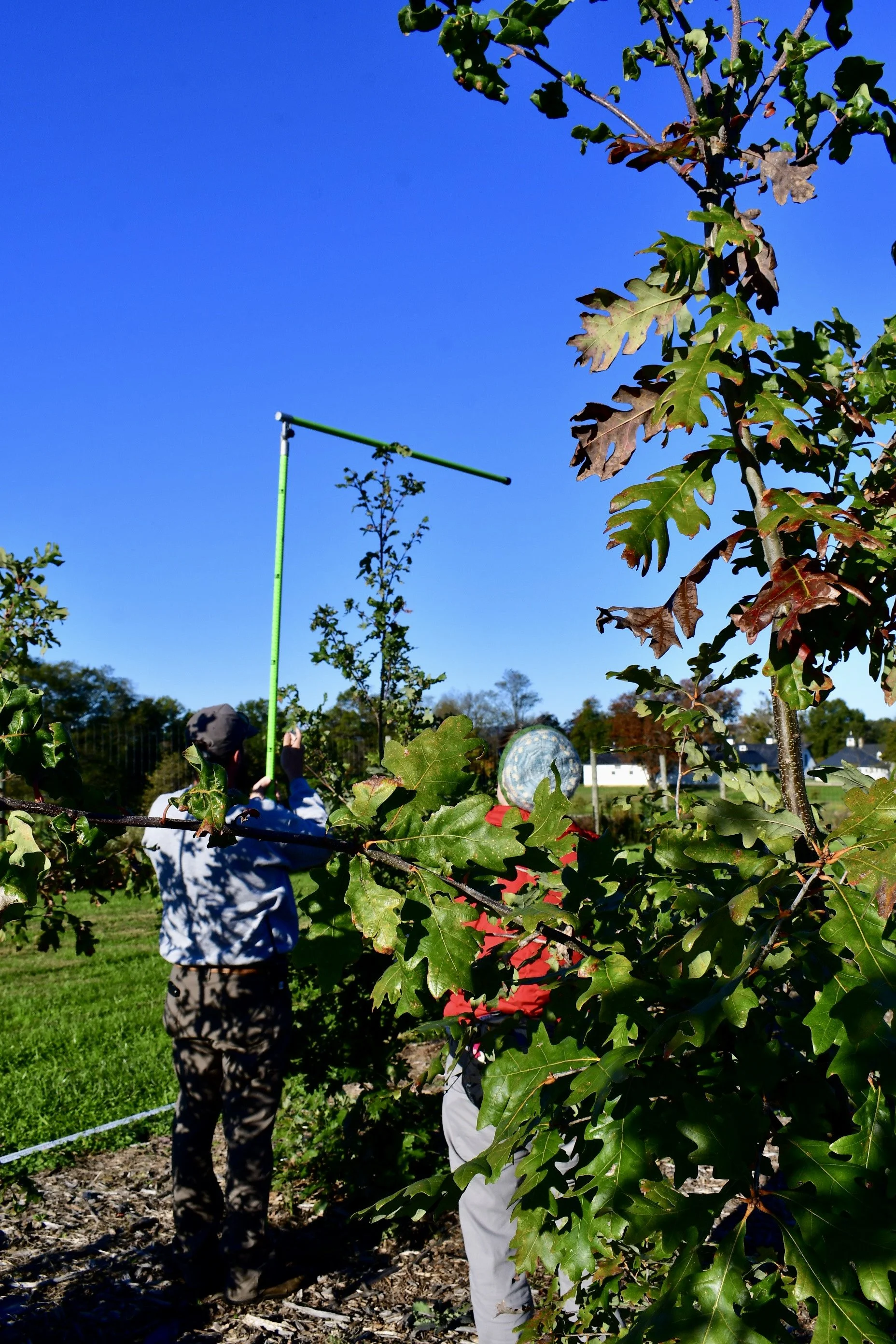
The latest measurements offer an opportunity to see how the saplings are developing over time. Comparing data from 2024, 2025, and 2026 reveals an increase in average tree height, alongside a wider range of growth rates among individual trees.
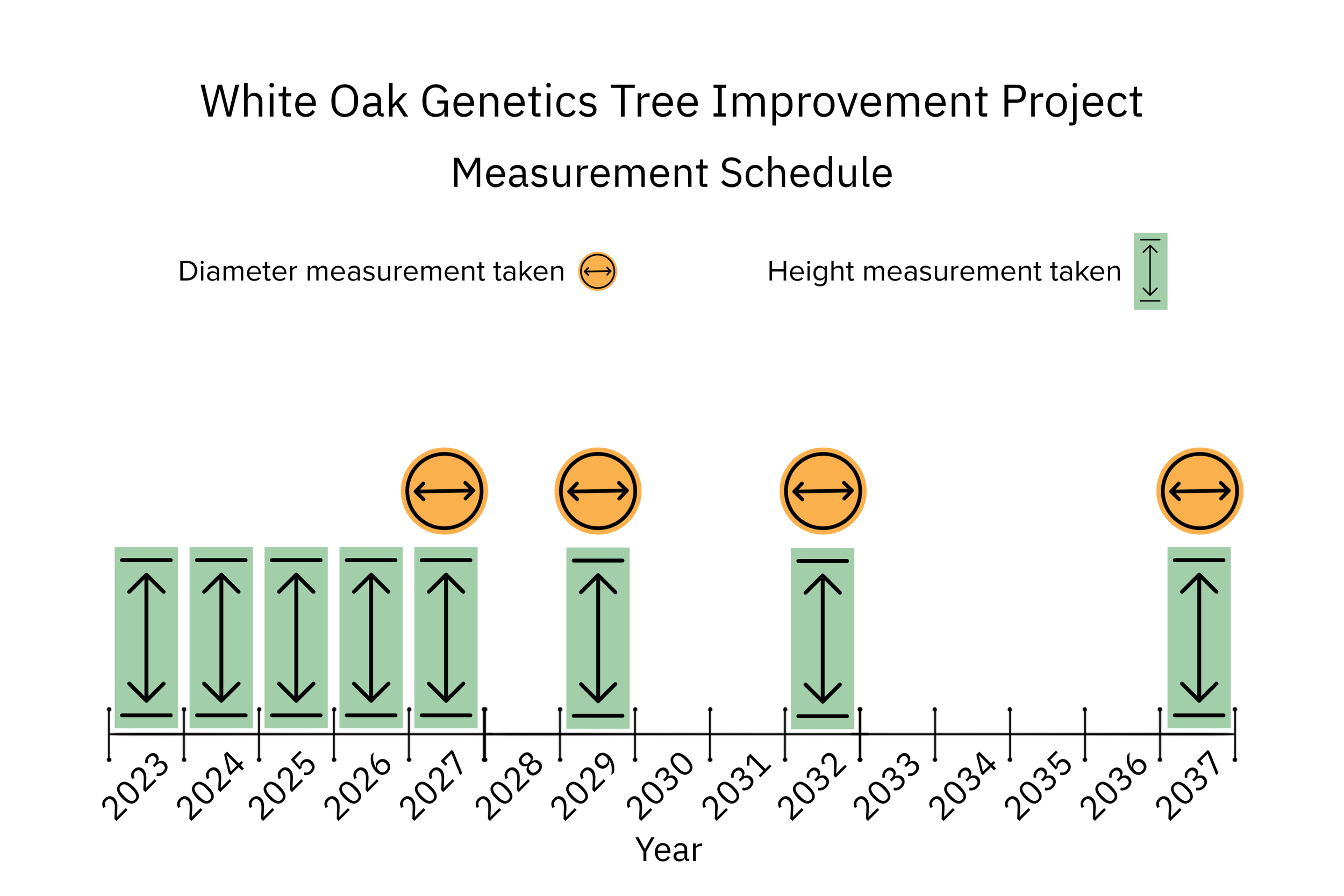
This visualization helps illustrate both the diversity represented in the plot and the different growth patterns emerging as the trees mature.
LOOKING AHEAD: THE NEXT GENERATION OF WHITE OAK
The White Oak Genetics & Tree Improvement Program is organized around three interconnected phases:
Phase 1 – Acorn Collection and Genetic Archiving: Acorns are collected from mother trees across the geographic range of white oak to preserve genetic diversity and establish the foundation for future research.
Phase 2 – Progeny Testing: Seedlings are planted at regional research sites and monitored over time to evaluate the characteristics and performance of their parent trees. Oak Spring is participating in this phase.
Phase 3 – Seed Orchard Establishment: Superior parent trees and their offspring will eventually be used to establish seed orchards, producing high-quality acorns and seedlings for future planting and restoration efforts.
As the program progresses, Oak Spring's research plot will contribute to this third phase, helping make improved planting material available to support the conservation and regeneration of white oak.
The work taking place at Rokeby is part of a much larger collaborative effort, but it reflects an important part of Oak Spring's own commitment to research, biodiversity, and long-term landscape stewardship. By monitoring these young trees, we are contributing to a better understanding of a species that has sustained forests, wildlife, and communities for generations.
The future of white oak will take years to grow. At Oak Spring, we're proud to be part of the work helping it along!
Learn More About the White Oak Tree Improvement Project
Interested in learning more about the research happening beyond Oak Spring? Explore the broader White Oak Genetics & Tree Improvement Program, led by the University of Kentucky in collaboration with research institutions and conservation partners across the eastern United States.
White Oak Tree Improvement Plan- Explore the projects goal’s and research.
White Oak Progeny Testing- Learn how researchers evaluate the growth and characteristics of young white oaks.
Project Partners & Collaborators- Discover the organizations contributing to this collaborative effort.